Have you ever wondered what lies behind a simple string of numbers like 264.68.111.161? At first glance, it may just seem like a random sequence, but every IP address tells a story. From revealing locations to powering the websites we visit every day, IP addresses are the unsung heroes of the internet. Let’s take a journey together and explore what this particular IP could represent, how it functions, and why understanding it matters.
Understanding IP Addresses: More Than Just Numbers
Before diving into 264.68.111.161, it’s important to understand what an IP address is. Think of it as a digital home address. Every device connected to the internet receives an Internet Protocol (IP) address, allowing computers and servers to communicate with one another. Without IP addresses, our emails would never reach their destination, and websites would fail to load.
IP addresses are typically composed of four numbers separated by dots, like the one we’re examining. Each number can range from 0 to 255, defining the unique identity of a device within a network. In essence, this numerical code ensures that your internet activity reaches the right destination safely and efficiently.
The Anatomy of 264.68.111.161
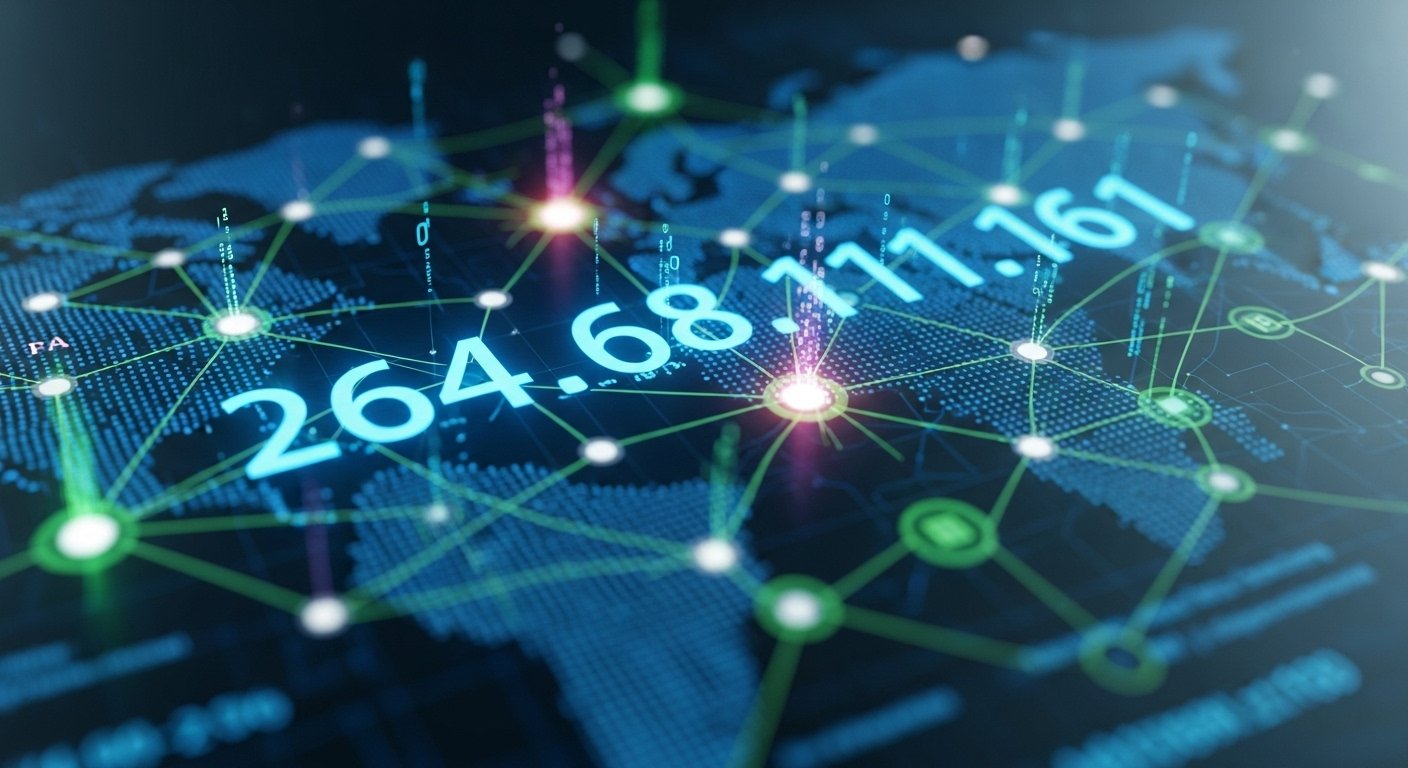
Let’s break down 264.68.111.161. Each segment of the IP has a specific purpose. The first number often indicates the broader network, while the subsequent numbers narrow down to specific devices. However, the first number here, 264, immediately raises a flag. Standard IPv4 addresses range only from 0 to 255 for each segment. This means 264.68.111.161 is technically outside the conventional range.
But does that make it useless? Not necessarily. It could represent a placeholder, an error, or an internal numbering system in a specialized network. In certain testing environments, unconventional IP formats are sometimes used to simulate large-scale networks or create private testing protocols.
Why IP Addresses Matter in Everyday Life
Even if 264.68.111.161 is unusual, IP addresses like it are critical to our online experiences. Whenever you stream videos, shop online, or post on social media, your device communicates with servers using IP addresses. They ensure your data flows smoothly from point A to point B.
Moreover, IP addresses help maintain security. They allow systems to detect suspicious activity, prevent unauthorized access, and track potential cyber threats. For instance, if an IP starts sending unusual traffic, it can be blocked to prevent hacking attempts.
Geolocation and the Mystery of IP Origins
Many people are curious about the “location” behind an IP address. Standard IPs can often be mapped to a country, city, or even an internet service provider. This geolocation helps businesses tailor content, improves security, and even aids law enforcement in cyber investigations.
However, with a number like 264.68.111.161, geolocation becomes tricky. Since it’s outside the conventional IPv4 range, mapping tools might fail to provide a real-world location. This reinforces the idea that not every IP we encounter fits neatly into the standard system.
How IP Addresses Impact Online Privacy
Have you noticed how websites track your browsing behavior? IP addresses are central to this process. They provide a digital fingerprint that can identify you or at least your network. While this helps improve user experiences, it also raises privacy concerns.
Many people use Virtual Private Networks (VPNs) or proxy servers to mask their true IP address. This way, they can browse anonymously, protect sensitive data, and even access region-restricted content. Whether or not 264.68.111.161 is real, understanding IP privacy helps us navigate the internet safely.
IP Addresses in Business Applications
Businesses rely heavily on IP addresses for operational efficiency. From managing servers to tracking user traffic, IPs form the backbone of corporate digital infrastructure.
For example, companies monitor IP ranges to detect unusual spikes in web traffic, which could indicate a potential cyberattack. They also use IPs to enforce digital rights, ensuring content is only accessible to authorized users. Even an unusual IP format like 264.68.111.161 could serve as a test entry in a private corporate network, helping IT teams simulate real-world scenarios without exposing live systems.
The Evolution of IP: From IPv4 to IPv6
You might wonder why we see numbers like 264 in IPs at all. The internet is evolving rapidly, and IPv4, which has been in use since the 1980s, is running out of addresses. This scarcity has led to the development of IPv6, which uses longer sequences and allows a virtually unlimited number of unique addresses.
IPv6 addresses look very different from IPv4. They include letters and numbers, separated by colons. This new system solves the shortage issue and enables a new era of internet-connected devices. In testing or experimental networks, unconventional numbers may appear, bridging the gap between old IPv4 systems and modern IPv6 implementations.
IPs and Cybersecurity: Why They Are Vital
Cybersecurity professionals treat IP addresses like clues in a detective story. By analyzing IPs, they can trace attacks, block malicious traffic, and protect sensitive information.
For example, if a server logs repeated requests from an unusual IP pattern, security teams investigate immediately. This ensures threats are neutralized before they compromise the system. Even a non-standard IP like 264.68.111.161 could be used in penetration testing exercises to identify vulnerabilities in a controlled environment.
Fun Facts About IP Addresses You Might Not Know
-
Every device has one – Smartphones, smart fridges, and even some cars use IP addresses to connect to networks.
-
Dynamic vs. static – Some IPs change over time (dynamic), while others remain constant (static).
-
They can reveal your city – Many geolocation tools use IPs to give a rough idea of your location.
-
Hackers target them – Cybercriminals often scan IP ranges to find vulnerable devices.
-
They are expanding with IoT – As more devices go online, IP addresses are more crucial than ever.
How to Check an IP Address Safely
If you’re curious about any IP, tools online let you perform safe lookups. You can check the ISP, country, and sometimes city associated with it. However, remember that VPNs, proxies, and corporate networks can mask real locations.
When exploring unusual IPs like 264.68.111.161, take note that online tools might give errors or placeholder results. This can be a fascinating insight into how flexible and complex IP systems have become.
The Takeaway: IPs Are Everywhere
From everyday browsing to advanced cybersecurity, IP addresses play an essential role in our digital lives. Even a mysterious IP like 264.68.111.161 sparks questions about how the internet functions and evolves. While this particular sequence might not exist in the real world, it serves as a reminder that behind every number, there’s a story of technology, connectivity, and innovation.
Next time you see an IP, don’t just scroll past. Think about the journey your data takes, the systems that route it, and the clever engineering that keeps it secure. In the digital world, numbers like 264.68.111.161 are more than just digits—they are the invisible highways of our modern lives.